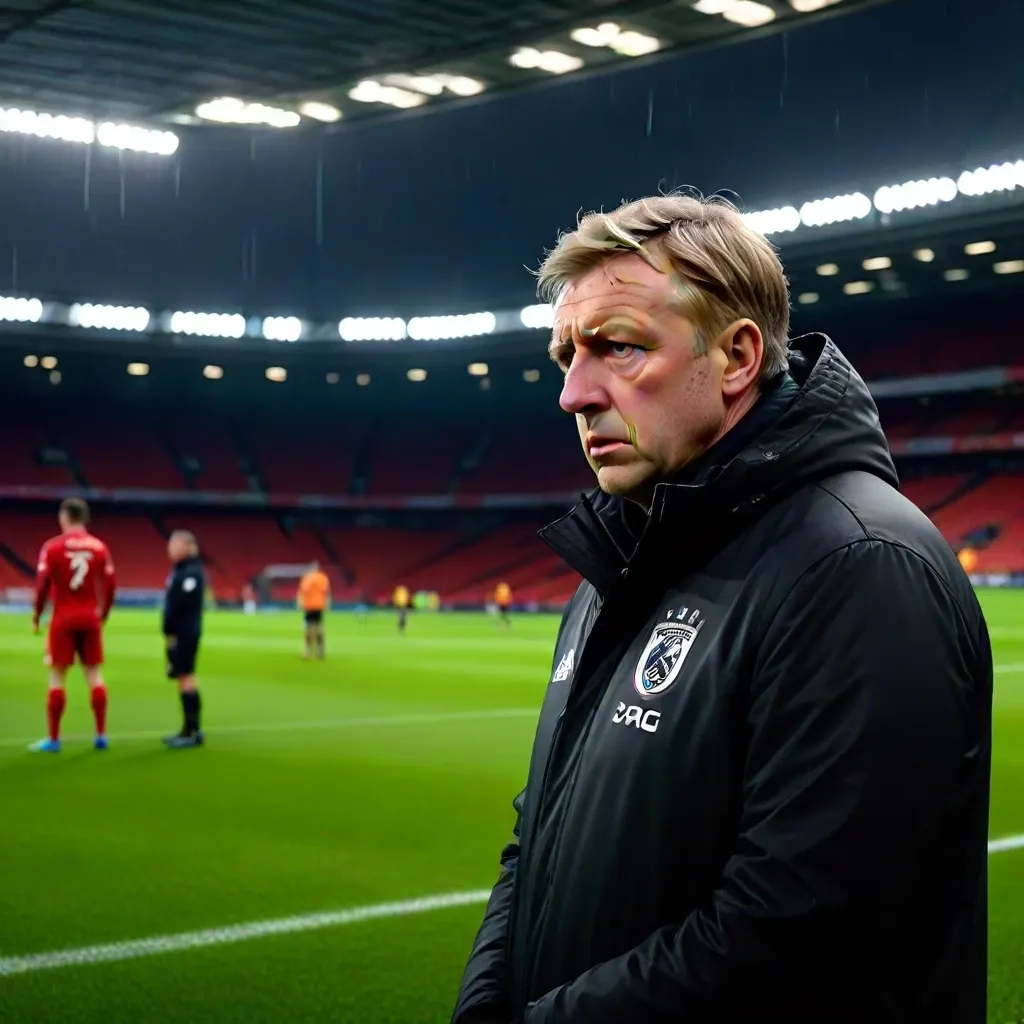
The Premier League: a realm of dazzling skill, breathtaking goals, and… managerial peril. The pressure cooker environment surrounding Premier League managers is perpetually set to high, perhaps higher than ever before. The modern game demands instant success, and patience is a virtue rarely afforded to those in the dugout. A string of poor results can quickly transform a hero into a scapegoat, igniting the dreaded “sack race.”
The turnover rate is staggering. Recent seasons have witnessed surprising managerial departures, demonstrating that even established names are not immune. The consequences ripple outwards, impacting team morale, playing style, and even the odds in football betting markets, where a change in manager can drastically alter a team’s perceived chances. This constant pressure creates a fascinating, if somewhat ruthless, landscape at the top of English football. So the question arises: Which managers are currently feeling the heat the most?
Understanding the ‘Sack Race’
The ‘sack race’ is a grim, yet compelling, aspect of professional football, representing the unofficial competition among managers to avoid being the next one dismissed from their position. Survival in this high-stakes environment depends on navigating a complex web of factors. These include on-field performance, often judged against lofty expectations fuelled by ambitious owners and demanding fans. Financial pressures, stemming from multi-million dollar investments in players and infrastructure, add another layer of complexity. Ownership changes frequently trigger managerial instability as new regimes bring in their own personnel. Even off-field controversies and the ever-watchful glare of social media and 24/7 sports news cycles can significantly impact a manager’s standing. The modern game leaves little room for error, intensifying the pressure and making success a precarious and often short-lived achievement.
The Role of Expectations
Expectations exert an enormous force in the ‘sack race’. For a club like Manchester United, anything less than competing for, and ideally winning, the Champions League is widely viewed as a failure. Conversely, a team like Bournemouth or Brentford sets its sights on maintaining Premier League status or, optimistically, securing a spot in a European competition. Therefore, a manager’s performance is always assessed in relation to these pre-defined goals. A string of losses that might be considered normal for a smaller club can trigger immediate crisis talks at a ‘big six’ team, while exceeding expectations at a smaller club will afford the manager much greater security, buying valuable time to build a sustainable project.
The Current Contenders: Analyzing Under-Pressure Managers
The Premier League hot seat is a precarious place, where fortunes can change in a matter of weeks. The intense scrutiny, unwavering expectations, and financial stakes create a pressure cooker environment for managers. This analysis profiles Premier League managers currently navigating significant difficulties, examining their recent performances, the factors contributing to their challenges, and their prospects for turning things around.
Manager 1 Analysis
Currently, the situation surrounding manager one is delicate. The team’s recent form shows a worrying pattern – a string of defeats compounded by lackluster performances against key rivals. The manager’s win rate has dipped considerably, and there’s a growing concern about the team’s tactical flexibility. Inside sources suggest tension between the manager and certain key players, further destabilizing the squad’s dynamics. Publicly, the club statement expresses support, but the directive board is undeniably concerned, as Champions League qualification, initially set as a minimum expectation for this season, now looks increasingly unlikely. The press is relentless, questioning the manager’s transfer dealings and tactical decisions. The odds for manager one to be sacked have shortened considerably, reflecting the growing uncertainty surrounding their future.
Manager 2 Analysis
The situation with manager two appears dire. The team’s results clearly indicate a crisis: a series of heavy defeats has seen confidence plummet. The tactical approach seems predictable, easy to counter, with opponents consistently exploiting the team’s weaknesses. There is growing talk of discontent within the dressing room, with reports of players questioning the manager’s training methods. The club statement maintains a facade of confidence, yet behind the scenes, the directive board is rumored to be actively considering alternatives. Manager two’s transfer strategy is under fire. Expectations for this season were moderate and fighting for a Europa League spot was more than welcome. The odds for the manager’s departure reflect an acceptance that a change is inevitable given the team’s downward spiral.

Key Factors Influencing Managerial Security
Managerial security in professional football, especially within high-stakes leagues, extends far beyond the win-loss record. While securing victories on the pitch remains paramount, a complex interplay of factors dictates a manager’s longevity. The intense scrutiny, passionate fan base, and significant financial pressures create a volatile environment where even seemingly successful managers can find themselves facing unexpected dismissal.
Consider the cases of managers who, despite achieving relatively positive results, were suddenly relieved of their duties. Perhaps a change in club ownership brought new philosophies and a desire for a different managerial style. Or maybe, a string of unfortunate player injuries exposed the squad’s lack of depth, leading to a dip in performance that triggered alarm bells. Conversely, history also provides examples of managers who, despite underwhelming results, were granted extended tenures due to strong relationships with the ownership or a perceived commitment to the club’s long-term vision. Examining these scenarios reveals the multifaceted nature of managerial security.
Several elements contribute to this intricate dynamic. The quality of the playing squad, often dictated by financial constraints, significantly impacts a manager’s ability to implement their tactical vision. Unforeseen injuries can cripple a team’s performance, leaving the manager vulnerable to criticism. External pressures from demanding fans and relentless media coverage further amplify the stakes. The club’s overall stability, both on and off the field, plays a role. However, one factor often overshadows the rest…
Ownership’s Role
The influence of the club owner is undeniably a central tenet in the complex world of football management. An owner’s vision, expectations, and, importantly, their relationship with the manager can make or break a tenure. A supportive owner, even during periods of adversity, provides invaluable stability and allows the manager to implement long-term strategies. Conversely, a demanding and impatient owner can create a climate of fear and uncertainty, hindering the manager’s ability to perform effectively. Ultimately, the owner’s perception of the manager’s alignment with the club’s overall goals is a crucial determinant of managerial security.
Data and Analytics: A New Lens on Managerial Performance
The beautiful game is evolving, and increasingly, that evolution is fueled by data. Forget gut feelings and lucky hunches; today’s Premier League managers are under scrutiny through the lens of data analytics. Performance evaluation is no longer solely based on wins and losses, expanding to encompass a wider spectrum of quantifiable metrics.
Expected Goals (xG) has become a mainstay, offering insight into the quality of chances created and conceded, irrespective of the final scoreline. Possession stats, pass completion rates, and pressing intensity provide a comprehensive picture of a team’s tactical approach and execution. This deeper dive allows for a more nuanced understanding of a manager’s impact, dissecting whether results are a product of strategic brilliance or simply good fortune.
However, the reliance on data isn’t without its limits. Data can’t fully capture the human element – team spirit, player motivation, and adaptability in the face of unexpected events. Some managers excel at leveraging data insights to optimize their strategies, while others struggle to translate numbers into on-field success. The challenge lies in finding the right balance between data-driven analysis and the intangible aspects of leadership that define a truly great manager.
Predicting the Future: Who’s Next to Go?
The Premier League managerial merry-go-round never stops spinning, and predicting who’s next to face the chop is a popular, albeit precarious, pastime. Several managers currently find themselves under immense pressure, their tenures hanging by a thread. Consider the teams struggling to meet expectations, particularly those who invested heavily in the summer transfer window. The spotlight shines brightest on those failing to deliver a return on that investment.
Analyzing current form, boardroom ambitions, and the ever-fickle patience of fans provides some clues. Teams lingering near the relegation zone are obvious candidates, but even those in mid-table aren’t entirely safe if performances are consistently underwhelming. The availability of high-profile replacements also plays a role; a readily available, experienced manager can accelerate a club’s decision to make a change. Bear in mind that football is unpredictable, and a single unexpected victory can sometimes buy a manager valuable time. However, for some, the writing may already be on the wall.

Strategies for Success: How Managers Can Survive the Pressure
The Premier League is a high-stakes arena where managerial tenures can be notoriously short. Success hinges not only on tactical acumen but also on navigating intense pressure from fans, owners, and the media. Implementing effective managerial survival strategies is crucial for long-term success.
Building strong relationships is paramount. Cultivating a connection with the fans can create a supportive atmosphere, even during challenging times. This involves consistent communication, acknowledging their passion, and striving to deliver a team they can be proud of. Establishing a clear and open dialogue with the owner is equally vital. Understanding their expectations, providing regular updates, and demonstrating a clear vision for the club’s future can foster trust and stability. Furthermore, a manager must forge strong bonds with the players. This requires effective communication, mutual respect, and a clear understanding of each player’s role in the team. A united and motivated squad is more likely to perform consistently.
Another key strategy is to implement a short-term plan focused on achieving quick, tangible goals. Securing a few early wins or improving team performance can alleviate pressure and boost morale. This can buy a manager valuable time to implement their long-term vision. It is also important to adapt to pressure on the pitch and on the media. Maintaining composure and making rational decisions under pressure are essential qualities of a successful Premier League manager.
Conclusion
The high-stakes world of Premier League management is a relentless cycle of pressure, performance demands, and, ultimately, potential job insecurity. As explored, various factors contribute to this, from impatient owners to the ever-increasing financial implications of success and failure. The rapid turnover of managers has become a defining characteristic of the league, a testament to the short-termism that often prevails.
Whether this trend will reverse in the future remains to be seen. The influx of data analytics and the growing sophistication of coaching methodologies might empower managers with more tools to navigate challenges. However, the intense scrutiny and the win-at-all-costs mentality are unlikely to diminish. Therefore, while individual cases of long-term managerial success will undoubtedly emerge, the overall landscape of Premier League management is expected to remain volatile, demanding adaptability and resilience from those who dare to lead.